What Is Hygge, and Why Coziness Isn't About Renovation
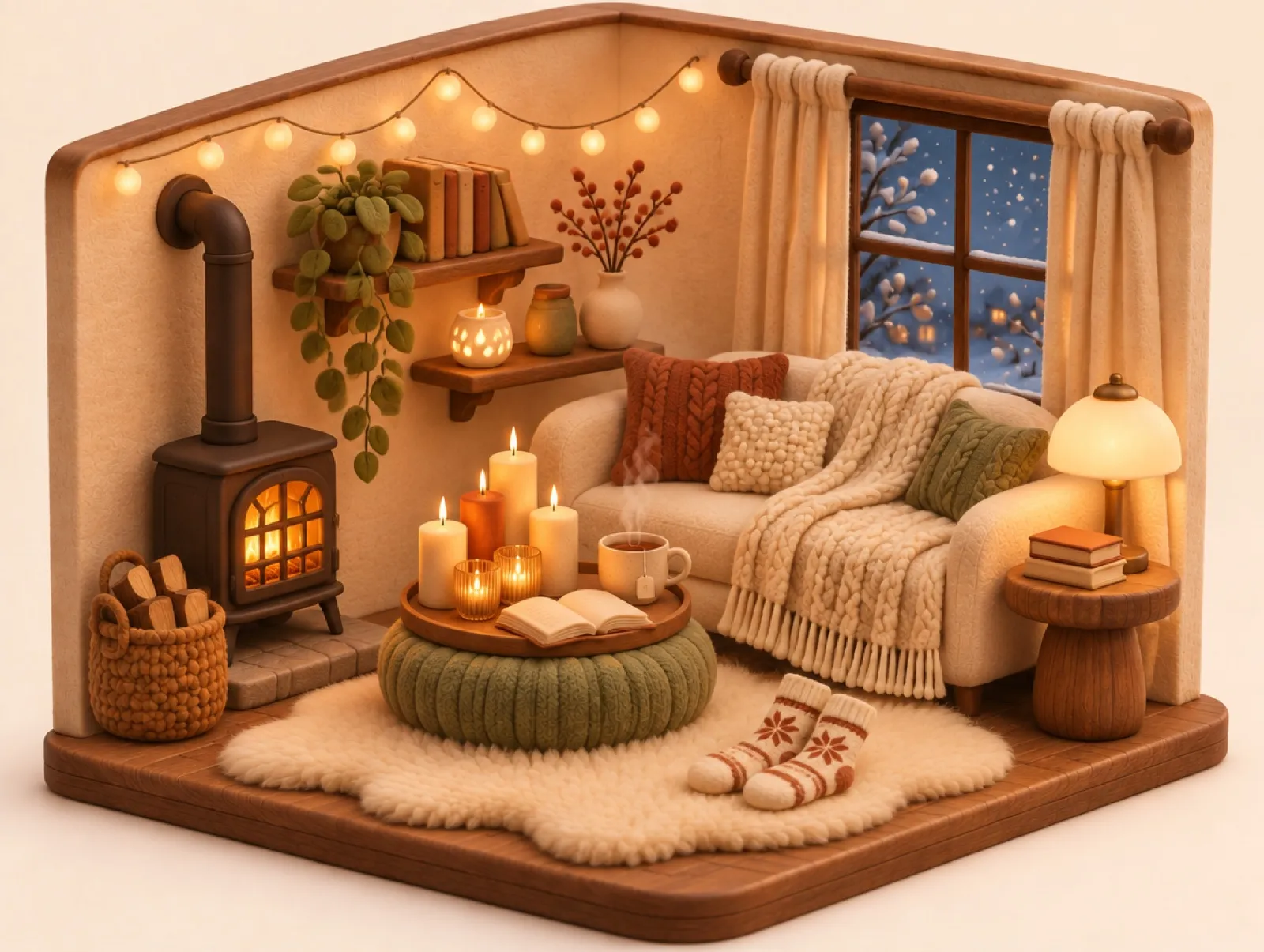
You moved the furniture. You bought the throw. You hung the fairy lights. The room still feels like a hotel: tidy, fine, and not yours.
Nothing is wrong with what you bought. Coziness doesn't come from objects. It comes from what you do in the room, and the Danes have a word for that.
What hygge means
Hygge (say "HOO-gah") is Danish for a feeling: being warm, unhurried and at ease, usually with simple things around you. A hot drink, low light, quiet after a long day.
English has no exact match. "Cozy" comes close, but cozy describes a room. Hygge describes the evening you have in it. A room can look cozy in a photo and still feel flat when you sit down. Hygge is the part the photo can't show.
That's also why it works anywhere. It doesn't need a fireplace, a house you own or a particular style. It needs an hour and a few small decisions.
Where the word comes from
Danish borrowed the word from Norwegian a little over two hundred years ago, where it meant something close to well-being. Further back it connects to Old Norse words for comforting and consoling.
You'll often read that hygge shares a root with the English word "hug". Linguists aren't sure about that. It's still a good way to remember the idea: a hygge room feels like it has its arms around you.
The place explains the habit. In Copenhagen the December sun sets before 4 p.m., and winter lasts a long time. You can sit through that under a ceiling light, or you can make the dark hours the best part of the day. Denmark has finished near the very top of the World Happiness Report year after year, and Danes often mention hygge when asked why.
The five ingredients of hygge
Hygge isn't a shopping list. It's a set of signals that tell your body it's safe to slow down.
- 1Warm light. Lamps and candles at or below eye level, overhead light off. On a bulb box, look for 2700 K or lower.
- 2Texture. Wool, knits, linen, wood. Things you want to touch.
- 3Warmth and taste. A hot drink, simple food, a blanket over your knees.
- 4Slowness. Nothing scheduled for the next hour. This is the hardest ingredient and the one that matters most.
- 5Company. People you're close to, or deliberate time alone with no screen.
Look at what isn't on the list: a renovation, new furniture, a design style. Three of the five aren't objects at all.
A 15-minute hygge ritual for tonight
Reading about hygge does very little. Trying it once does a lot. This takes fifteen minutes and costs nothing.
- 1Minute 0: switch off the overhead light. Leave one lamp on, or light a candle.
- 2Minute 1: put your phone in another room. Face down on the sofa doesn't count.
- 3Minute 2: make a hot drink. Tea, cocoa, coffee if it's early.
- 4Minute 5: wrap up. A blanket or a thick sweater you already own.
- 5Minutes 5 to 15: sit. Music or silence. No task, no goal.
The first evening feels a little strange. By the third, the lamp going on at six starts to feel like the day ending properly. Danes repeat this most evenings through the cold months, and the repetition is the point. One candlelit night is a nice evening. Twenty of them change how your home feels.
Hygge in a small rental
You don't need the whole apartment to cooperate. You need one spot.
- Pick the seat you already drift to in the evening.
- Put a lamp beside it, not above it.
- Keep a blanket there all the time, draped, not folded away.
- Leave a small surface within reach for a mug and a book.
That's a hygge corner, and nothing in it needs a nail or a landlord's permission. Our weekend cozy corner guide builds one step by step on three budgets.
Hygge also isn't only for winter. In summer it moves outside: an open window, dinner that runs long, a balcony at dusk with the lights off. The ingredients stay the same. Only the temperature changes.
Hygge isn't about money
The most common mistake is assuming coziness has to be bought. None of the five ingredients needs a purchase. Turning off a light is free. So is the blanket from your bed and the tea in your cupboard.
Objects can make it better. A soft throw feels nicer than a scratchy one, and a proper lamp beats a bare bulb. If you do decide to spend, spend in this order:
- A warm bulb first. A few dollars, and it changes every evening from then on.
- A throw second. It's the thing you touch.
- A lamp third. One you can place beside your seat, at shoulder height.
Everything after that is an upgrade, not an entry fee.
Four mistakes to skip
- Buying a "hygge kit" before you've tried a single evening.
- Dimming the lamps but leaving the overhead light on.
- Keeping your phone within reach "just in case".
- Saving it for guests or weekends. Hygge is a weeknight habit.
Where layout comes in
Sometimes the light is right, the blanket is right, and you still can't settle. That's usually the room's layout, not the mood. If your seat has its back to the door, or you have to squeeze past a table to reach it, no candle will fix that.
Layout is what feng shui is good at. Our beginner's guide to feng shui furniture rules covers the practical parts, and hygge vs. feng shui shows how the two work together in one room.
Try it tonight
Tonight's checklist:
- Turn off the overhead light for at least an hour.
- Find a blanket or a thick sweater, and use it now.
- Put your phone in another room for 15 minutes.
- Swap background video for music or silence.
- Tomorrow, do it again at the same time.
If a few evenings leave you wanting more, the next step is the room itself: the textiles, the lamp and the small pieces that suit the space you already have. You can upload a photo of your room to Roomerly. It suggests a style and a palette for your actual room and lists real pieces within your budget, with no renovation involved.
Coziness doesn't wait for a renovation or a paycheck. It starts tonight, with the overhead light off and something warm in your hands.
FAQ
How do you pronounce hygge?
Most English speakers say "HOO-gah". The Danish sound is a little closer to "HUE-guh", with a short, soft ending. Either one will be understood.
What is the difference between hygge and cozy?
Cozy describes how a place looks or feels. Hygge describes what you do there: slowing down, lowering the light, sharing a drink. A room can be cozy without anyone in it. Hygge needs someone taking the time to enjoy it.
Is hygge only for winter?
No. It's best known as a winter habit because Danish winters are long and dark, but summer has its own version: long dinners, open windows, evenings outside. The ingredients are the same.
Do I need to buy anything to try hygge?
No. A lamp or candle, a blanket and a hot drink are enough, and most homes already have all three. If you want one upgrade, a warm-white bulb (2700 K or lower) makes the biggest difference for the least money.
Can hygge work in a small or rented apartment?
Yes. Hygge depends on light, texture and habit, not on space or ownership. One corner with a lamp, a seat and a blanket is enough, and everything in it moves with you.