A Cozy Black Friday: How to Shop for Your Home Without Regret
Every year the same thing happens. You open one tab to look at a lamp, and forty minutes later your cart has a vase, a "set of twelve" something and a mirror for a wall you don't own.
The parcels arrive, the room looks busier instead of cozier, and the receipt says you saved a lot.
Here's the catch: a discount makes the price smaller, but it doesn't make the object smaller. A thing that doesn't suit your room takes up 100% of its space, whatever you paid for it. So let's make a plan for Black Friday week, one that takes an evening and keeps your home calm.
Why sales make us buy the wrong things
It helps to know the tricks, because then they stop working so well.
- Countdown clocks and "only 3 left" labels make you decide before you think.
- A crossed-out price makes the new price look like a gift, even when the old price was never real.
- Bundles hide the one thing you wanted behind five things you didn't.
None of this is evil, it's just shopping. But it works best when you have no plan, and that's the part you can fix.
Three questions before you open any tab
A deal is only a deal if you'd have bought it anyway.
- 1Can I point to the exact spot where it will go?
- 2Does it solve a problem I can name? ("The evenings feel too bright", "the sofa corner feels bare")
- 3Would I pay full price for it next month?
If any answer is no, close the tab. The third question does most of the work: if the discount is the only reason you want something, you aren't buying a lamp, you're reacting to a banner.
Measure first (10 minutes)
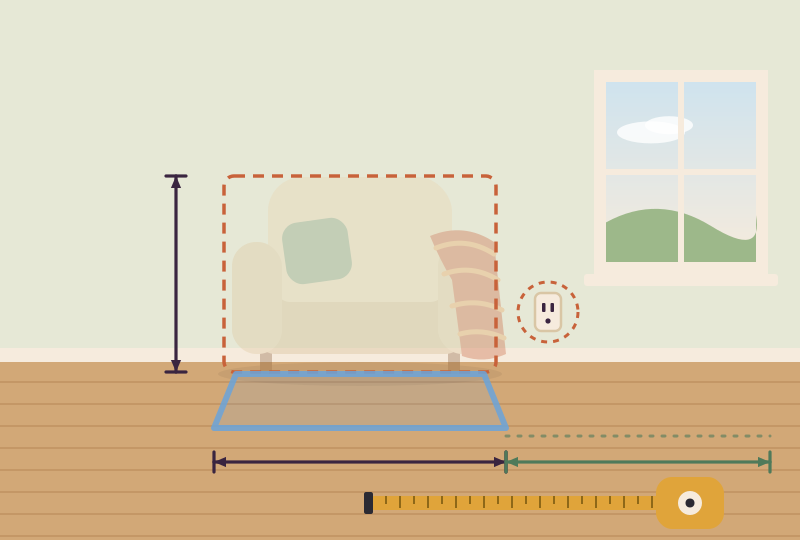
The most expensive mistake in home shopping is the thing that doesn't fit, and it's also the easiest to prevent. Before the sales, collect four things:
- The width, depth and height of the spot, in cm or inches.
- The distance to the nearest outlet, if the item has a plug.
- How much walkway is left. Keep 75–90 cm (30–36 in) clear, as in our small-room guide.
- One daytime photo of the whole room, so you can judge colour and style later.
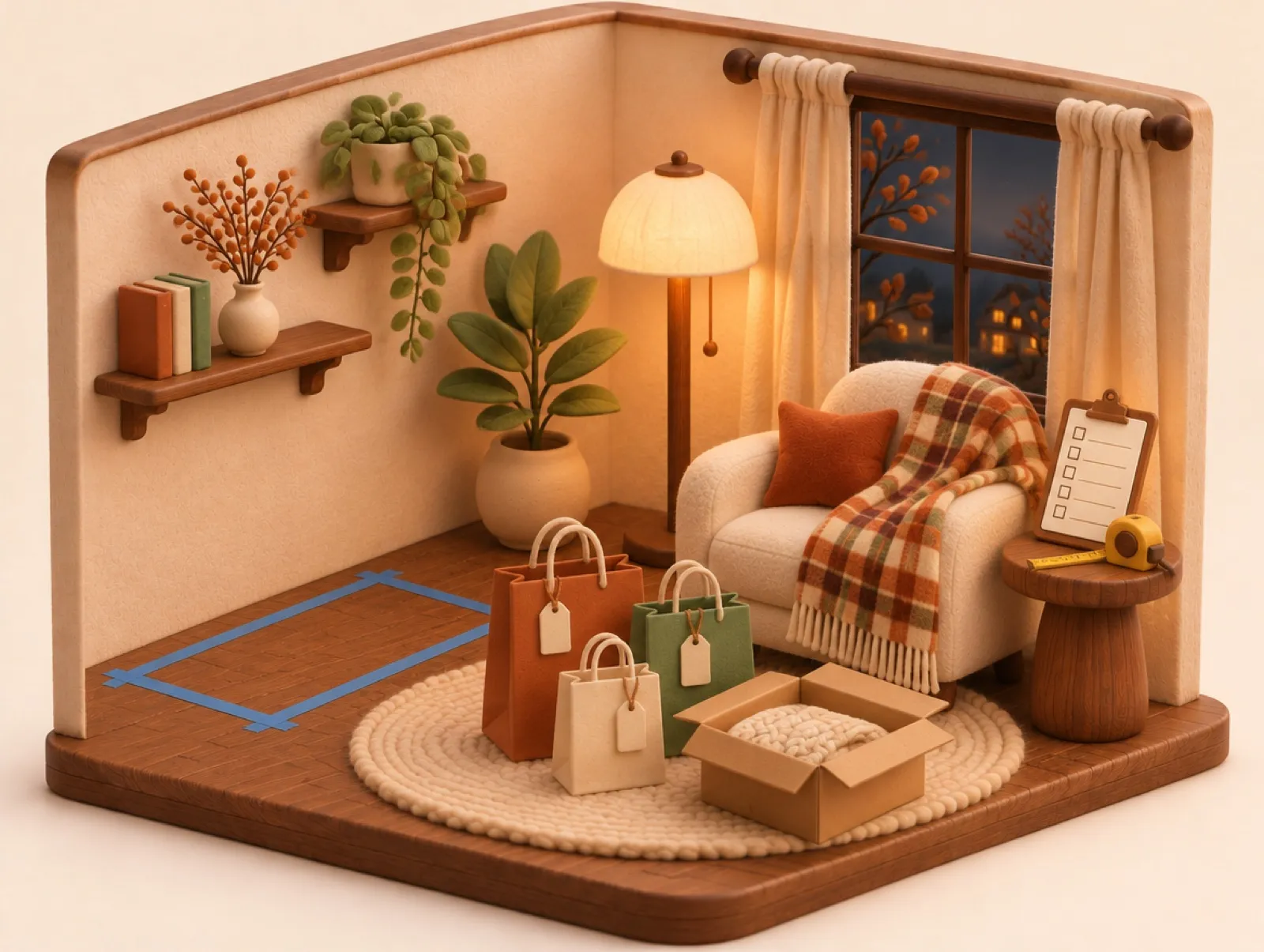
Then try a trick that costs nothing. Stick painter's tape on the floor in the exact footprint of anything big and leave it there for a day or two. If you keep stepping around it, you just saved yourself a return.
Two carts, same evening
Here are two carts for the same room, bought with the same budget.

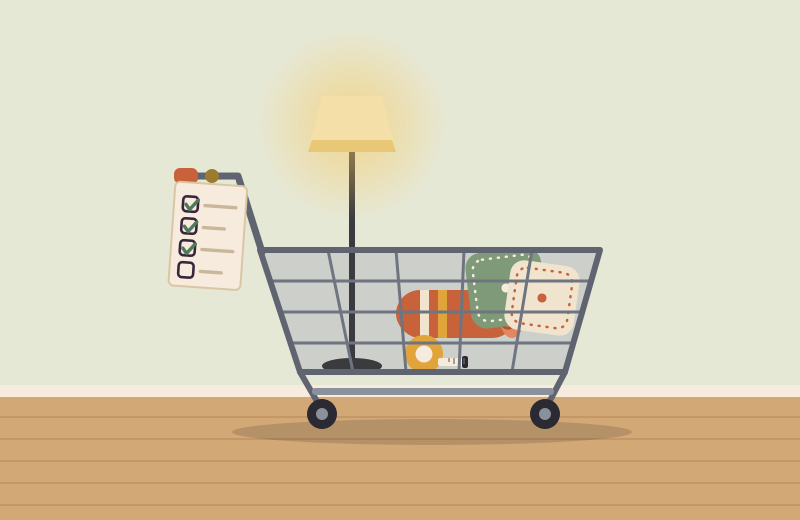
The first cart is full of nice things that have nothing to do with each other: a vase, a gift set, a tangle of lights, a plant, a print, two cushions that fight. The second has a lamp, a throw, two cushions in the room's colours, a tape measure, and a checklist on the handle.
Nothing in the second cart is exciting on its own. Together they make a corner.
What's worth buying, what can wait, what to skip
Worth buying (if it's on your list)
Warm light: a lamp, a dimmer, warm-white bulbs (around 2700 K). Soft layers you touch every day: a throw, cushion covers, bedding. A rug, if your floor is bare. These change how a room feels more than any object on a shelf, which is why our hygge guide starts with light and texture.
Can wait
Large furniture you haven't measured or sat in. Anything where colour matters and you've only seen it on a screen (order a swatch first). Wall art for a wall you haven't lived with yet.
Skip
Sets and bundles with items you didn't choose. This year's trend colour. Anything bought "for the empty shelf" with no purpose. Mystery boxes. If you can't say where it goes, you can't say why you need it.
If you're curious how the same idea works at a smaller scale, our weekend cozy corner guide builds a whole corner from a handful of items like these.
Split the budget before you spend it
Pick a total first and write it at the top of your list. Then split it. This is a rule of thumb, not a law, but it keeps the money on the things that make a room feel cozy.
- Light and soft layers50% · $150Lamp, bulbs, throw, cushion covers
- One anchor piece30% · $90A rug, an armchair or a mirror, if it passed the tape test
- Small touches10% · $30Candles, a plant, a tray
- Reserve10% · $30Shipping, bulbs, covers, hooks, a return that costs money
Type your own budget into the box and the amounts update.
Half goes to light and soft layers, because that's where the mood comes from. About a third goes to one anchor piece, but only if it passed the tape test. A small slice goes to finishing touches. And keep a reserve for the things everyone forgets: shipping, a bulb, a cover, a return that isn't free.
Five-minute checks before you click Buy
- Price history: look at what it cost over the last month. Some "discounts" are the usual price with a banner.
- Dimensions in the product details, not in the photos. Compare them with your tape.
- Return policy: how many days, and who pays for the return shipping?
- Delivery date: a Black Friday order that arrives in January isn't a Christmas decoration.
- The three-star reviews. They're usually the most honest about size, colour and quality.
The whole plan in one evening
- 1Write a list of no more than seven things, each with its exact spot.
- 2Measure, and tape the footprint of anything big.
- 3Set a total and split it.
- 4Run the five-minute checks on every item.
- 5Buy only what's on the list. Put anything else on a "maybe" list and look at it again in 24 hours.
Most of the "maybe" items won't survive the 24 hours, and the ones that do are probably real finds. Sales often run past Friday anyway, so a day's pause usually costs you nothing.
Where Roomerly fits
The hardest question on your list is "will this look right in my room?", and a product photo can't answer it. If you want a head start, you can upload a photo of your room to Roomerly before the sales. It suggests a style and a palette, then shows a redesign built from real products within your budget, so you get a shopping list that already works together. It won't tell you which deals are real, so the price check is still yours. Think of it as help with the list, not with the discount.
A cozy home is built from a handful of right things, not from a hundred good prices.