How to Build a Cozy Corner in a Rental in One Weekend (Three Budgets, Zero Drilling)
You don't have to redo a rental to make it feel like yours. Claim one corner with five layers (light, a seat, texture, something alive and something personal). Pick a budget from $30 to $150, skip the drill, and you can finish by Sunday evening.
White walls. A landlord who says no to nails. A lease that ends in eleven months.
A rental can feel like a waiting room: nothing is wrong with it, and nothing is yours. The usual advice is "make it your own", which is not helpful when you can't paint, drill or replace the floor.
So don't try to fix the whole apartment. Fix one corner.
Why a corner works
A corner works because it's a place, not a room. It has a purpose (reading, coffee, winding down) and a boundary (a rug, a pool of lamp light). Your brain reads that boundary as "this part is mine".
Three practical reasons:
- It's small. One area, a handful of decisions, a finished result in a weekend.
- It has two walls. Sitting with your back to a wall is the same "support" idea from our feng shui layout post, and it makes a spot feel safer and calmer.
- It travels. Everything in it leaves with you when the lease ends.
The five layers of a cozy corner
Every good corner is built from the same five layers. Here they are, numbered.
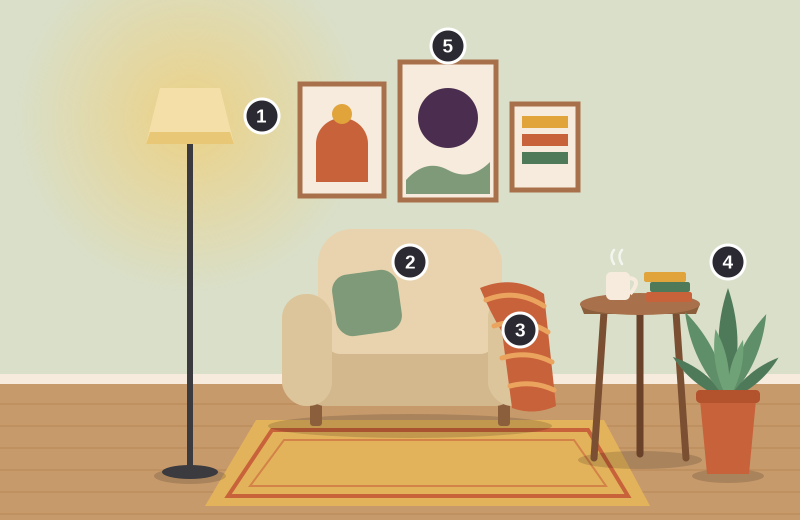
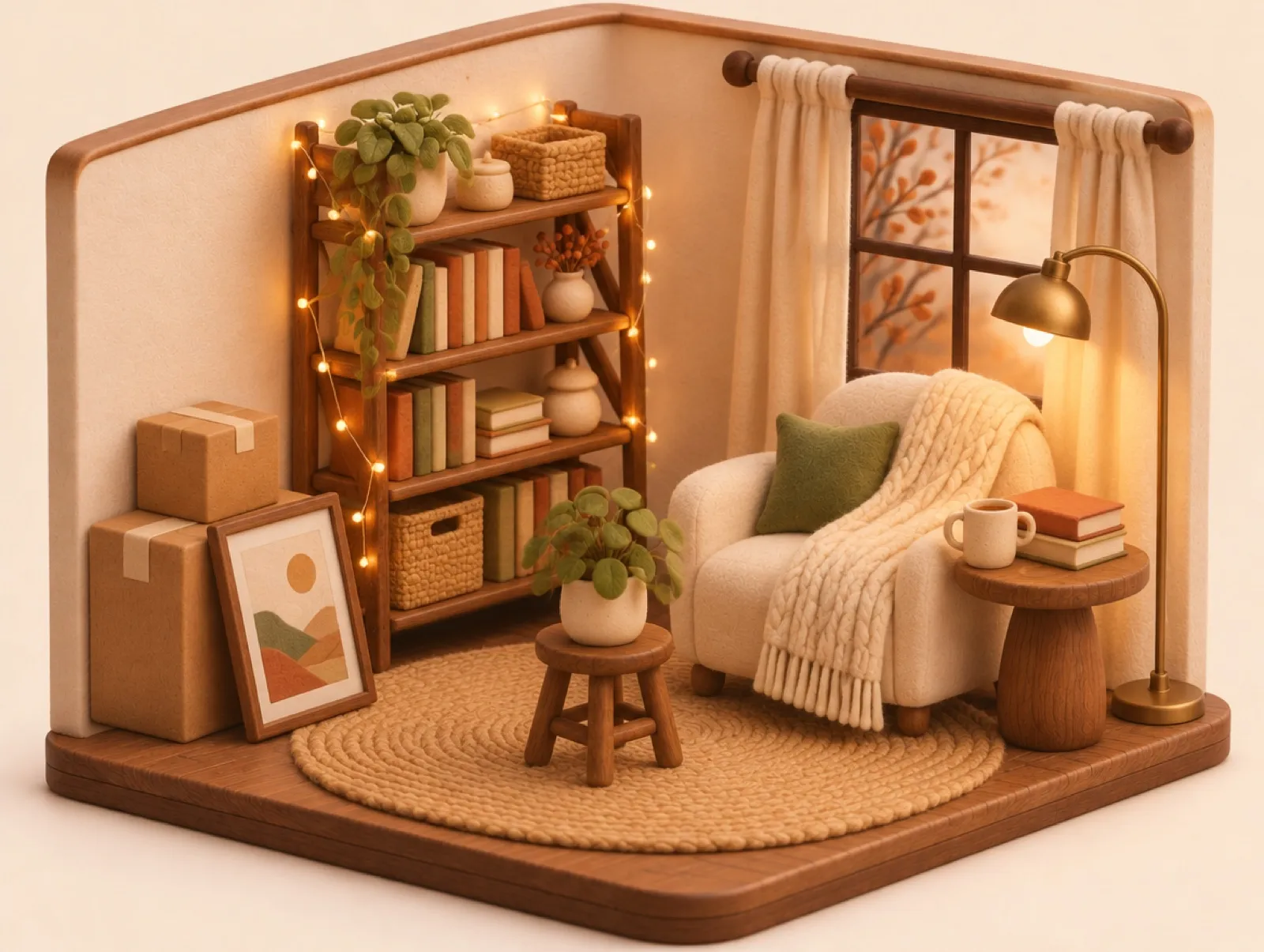
- 1. Light. Warm and low, from the side, never a single bright bulb overhead.
- 2. A seat. Somewhere you actually want to sit for 20 minutes: a chair, a pouf, the end of the sofa.
- 3. Texture. A throw, a cushion, a rug. This is what makes it feel soft.
- 4. Something alive. A plant, or a few branches in a jar.
- 5. Something personal. Prints, books, a mug. Group them in threes.
The "in threes" bit is the rule of three again: one tall, one medium, one small always looks more intentional than a row.
The difference, side by side
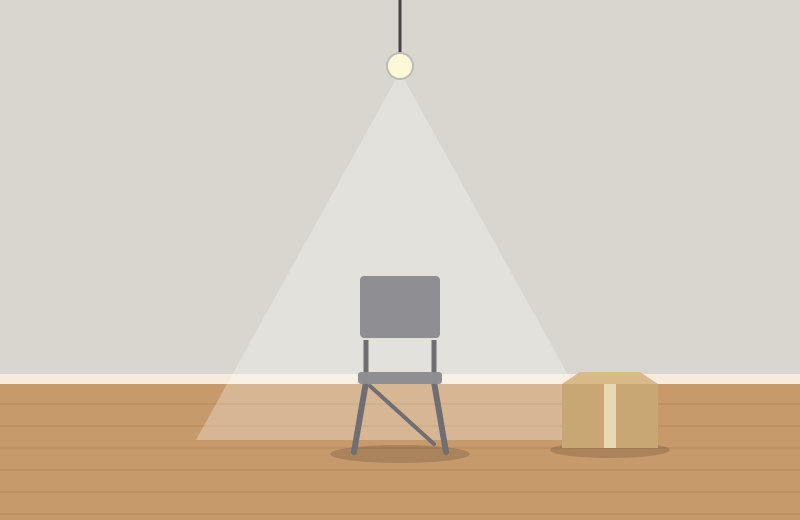
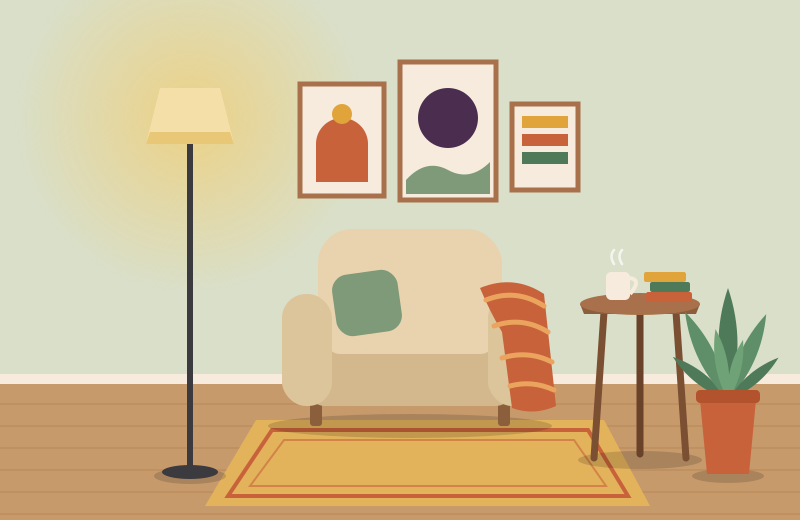
Same walls and same floor. Nothing was painted, drilled or bolted.
What to look for in each layer
Light. Aim for a lamp whose shade sits roughly at eye level when you're seated, with a bulb at 2700 K or lower. If you only buy one thing, buy this. Light changes how everything else looks.
A seat. Sit in it for five minutes before you buy, or at the pickup if it's second-hand. If your back isn't supported, add a cushion. No room for a chair? A big floor cushion against a wall works just as well.
Texture. Mix two or three (knit, linen, wool) and keep to one pattern at most. Drape the throw over one arm instead of folding it neatly. It should look lived in.
Something alive. Plants that tolerate low light, like pothos, snake plants or ZZ plants, forgive a lot of neglect. A few branches in a jar cost nothing.
Something personal. Pick one object with a story: a postcard, a mug from a trip, a book you love. That's the part no store can sell you.
Three corners, three moods
The same five layers can be tuned for the way you actually live.
- The reading nook: an armchair or big floor cushion, a lamp at shoulder height, a small shelf or a stack of books within arm's reach, and a throw.
- The coffee corner: a small table for two, two cushions or stools, a plant, and a tray for the mug and kettle. It's best next to a window.
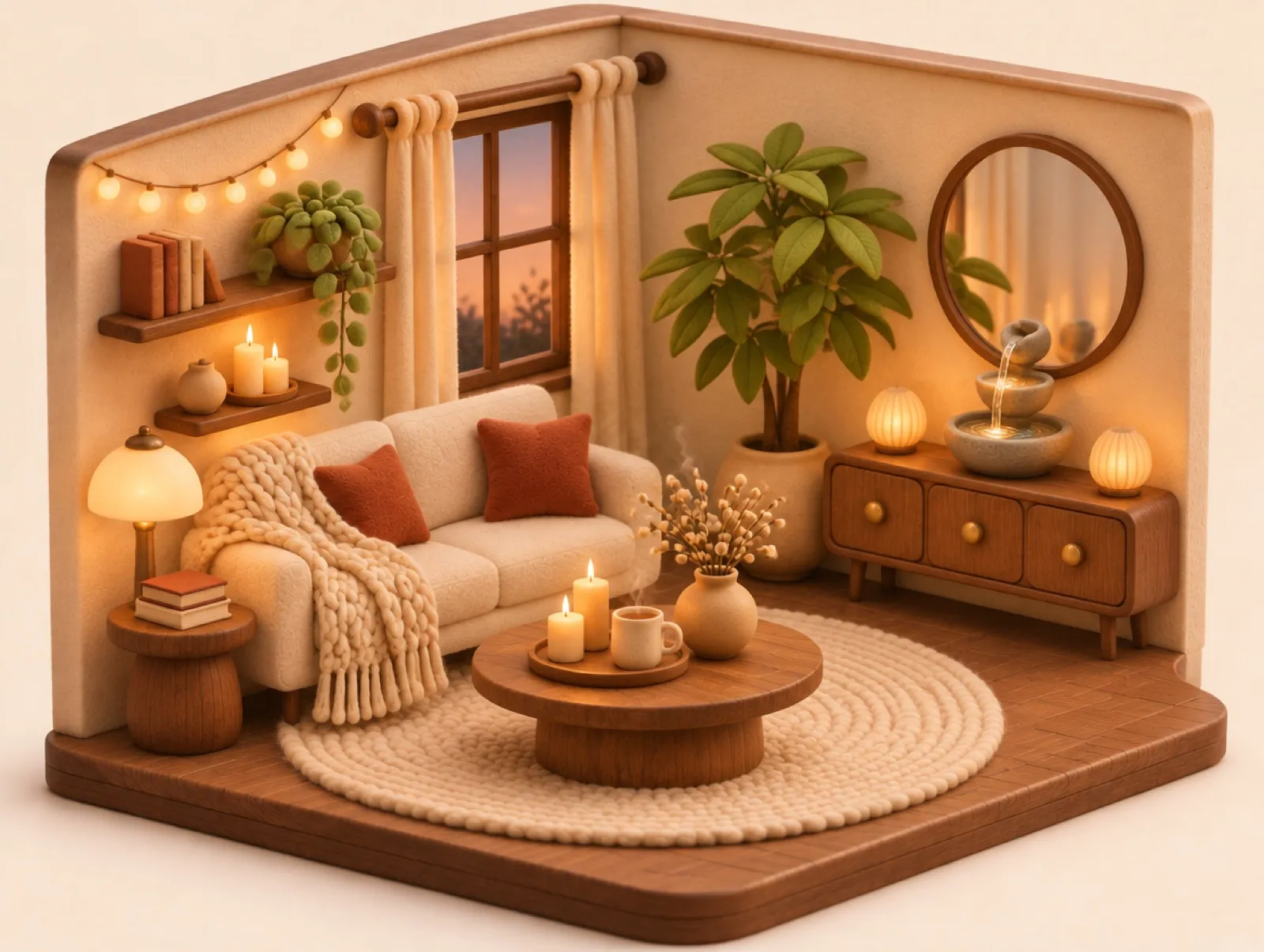
- The wind-down corner: a low seat, a dim lamp, a candle (flameless is fine) and a no-phone rule. This one is hygge in its purest form.
Pick the one that matches the minutes you already waste scrolling on the sofa. That's the corner you'll actually use.
Step 1: pick the corner (10 minutes)
- An outlet within reach, or a spot where you can place a lamp near one.
- Some daylight, or at least not the darkest part of the room.
- Out of the main walking path (see the 75–90 cm rule in our small room guide).
- Where you already end up, phone in hand. Build around real habits.
If you're short on space, our small room arrangement tricks help you keep the walkway clear while you do this.
Step 2: choose your budget
$0 to $150: what the complete corner adds up to.
You don't have to buy everything. Each tier works on its own, and each one builds on the last.
- Starter, about $30: warm-white bulbs for a lamp you already own, one throw blanket, one plant. Lean any prints you have against a shelf or the wall.
- Comfortable, about $75: everything above, plus a plug-in table or floor lamp and a cushion cover or small rug to mark the zone.
- Complete, about $150: add a second-hand accent chair (or a big floor cushion), a small side table and a trio of frames with removable strips.
These are ballpark prices; second-hand shops and local marketplaces often cut them a lot. Where should the money go first?
- Spend on the lamp and the seat. You'll use them every single day, and cheap versions are the first things that make a corner feel flimsy.
- Save on frames, plant pots, cushion covers and the throw. Thrift shops, second-hand marketplaces and your own shelves are full of good ones.
No holes, no problem
- Lean art on a shelf, a ledge or the floor. It looks relaxed, not unfinished.
- Use removable adhesive strips and hooks, and check their weight rating.
- Choose plug-in wall lamps instead of hardwired ones.
- Use a rug, not furniture, to define the zone.
- Take a photo of the corner before you start, and re-read your lease.
Four mistakes to skip
- Lighting the corner only from above.
- Choosing furniture that's too big for it.
- Buying one matching set, which looks like a showroom.
- Forgetting where the outlet is.
The weekend plan
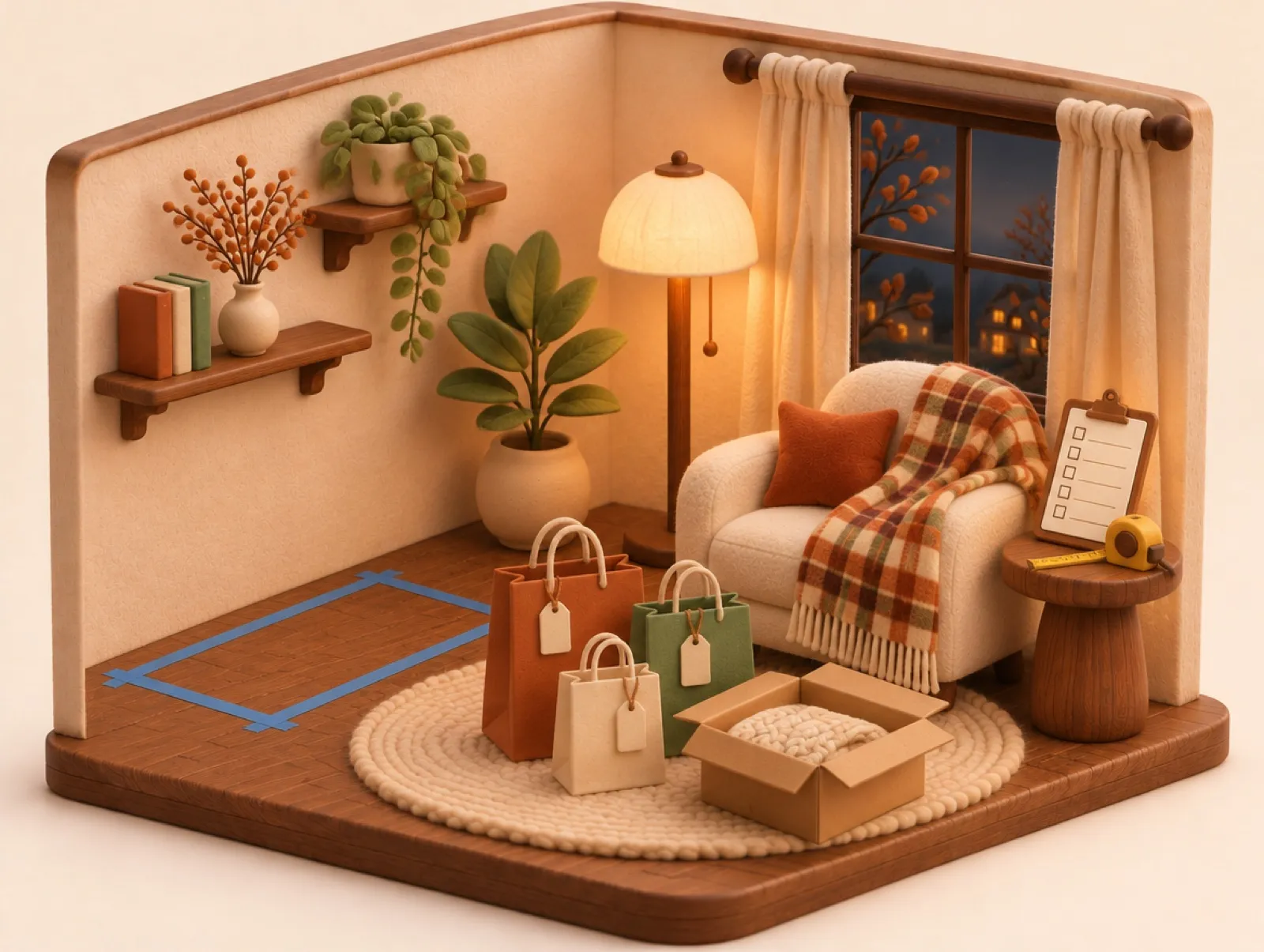
- Saturday morning: pick the corner, clear it, measure it, tape the outline of the seat on the floor.
- Saturday afternoon: shop or thrift with a short list, one item per layer.
- Sunday morning: build it in order, light first, then seat, texture, plant and art.
- Sunday evening: sit there for 20 minutes with a mug. Change one thing.
- Then wait a week before you buy anything else.
Building in that order matters. Light changes how everything else looks, so it goes first.
Make it a habit
A corner you only look at stays a photo. A corner you use becomes yours. For the first week, spend twenty minutes there every evening, ideally with the hygge ritual of dim light, a hot drink and no phone. That habit is what turns "decorated" into "home".
The hardest part isn't the shopping. It's knowing what will look right with your floor and your walls. If you'd like to see a few options before you spend anything, you can upload a photo of your corner to Roomerly. It suggests a style and a palette, then lists real pieces within your budget, so by Saturday morning the shopping list is already done.
A rented place doesn't have to wait for a better apartment. Start with one corner, and the rest of the place starts to feel different too.