The Rule of Three (and the Golden Ratio) for Styling Decor
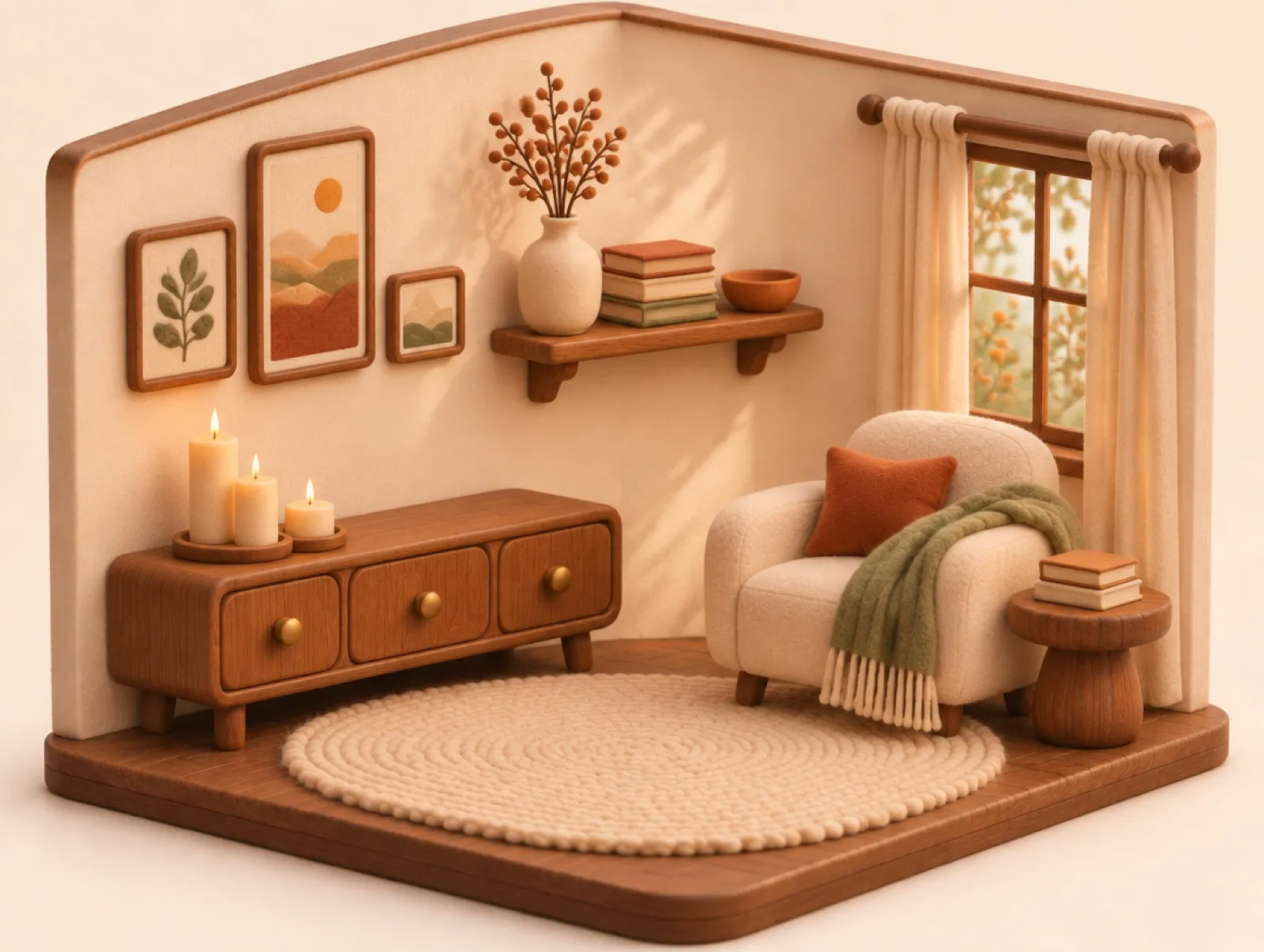
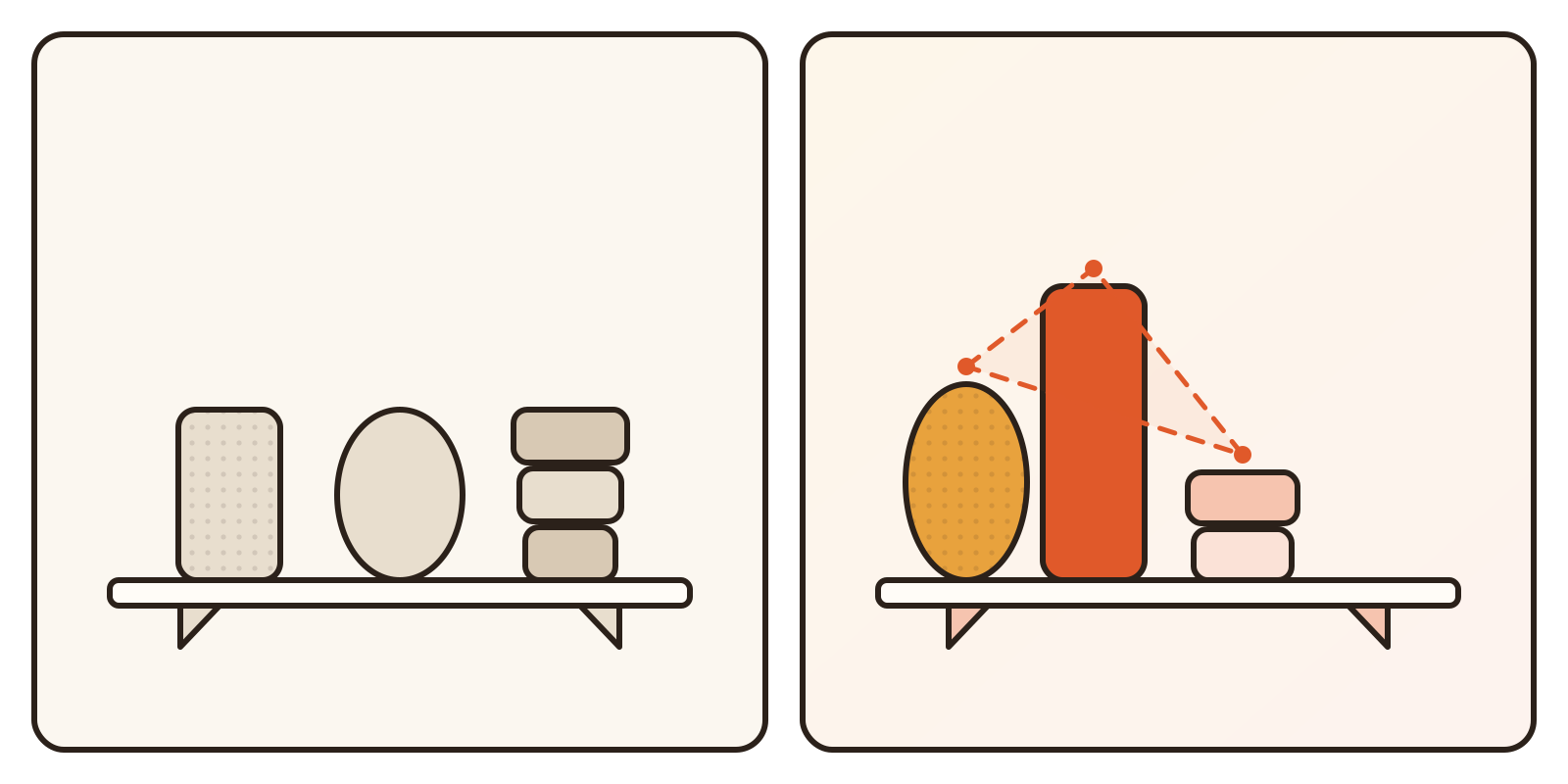
You own the vase, the stack of books and the small bowl. Each one is fine. Lined up on the shelf, they look like they were put down and forgotten.
The objects aren't the problem. The arrangement is. And the fix takes about ten minutes.
What the rule of three says
Group decor in odd numbers, most often three, and make the pieces different heights.
That's the whole rule. It works on shelves, coffee tables, consoles, mantels and nightstands, and it works with things you already own.
Why odd numbers work
Put two matching candlesticks on either side of a vase and you get a hotel lobby: balanced, finished, and a little dull. The eye pairs things up, sees that both sides match, and moves on.
Three objects can't be split into two equal halves. Your eye has to travel between them and compare heights and gaps. That small bit of movement is what reads as "someone arranged this".
Five and seven work the same way. Three is simply the smallest group that does the job, so it's the easiest place to start.
Think in triangles
Before you move anything, stop looking at single objects and look at the outline they make together.
The classic arrangement is a triangle:
- Tall: the anchor. A vase with branches, a lamp, a framed print.
- Medium: the support. A stack of books, a plant, a lower vase.
- Small: the accent. A bowl, a candle, a small object you like.
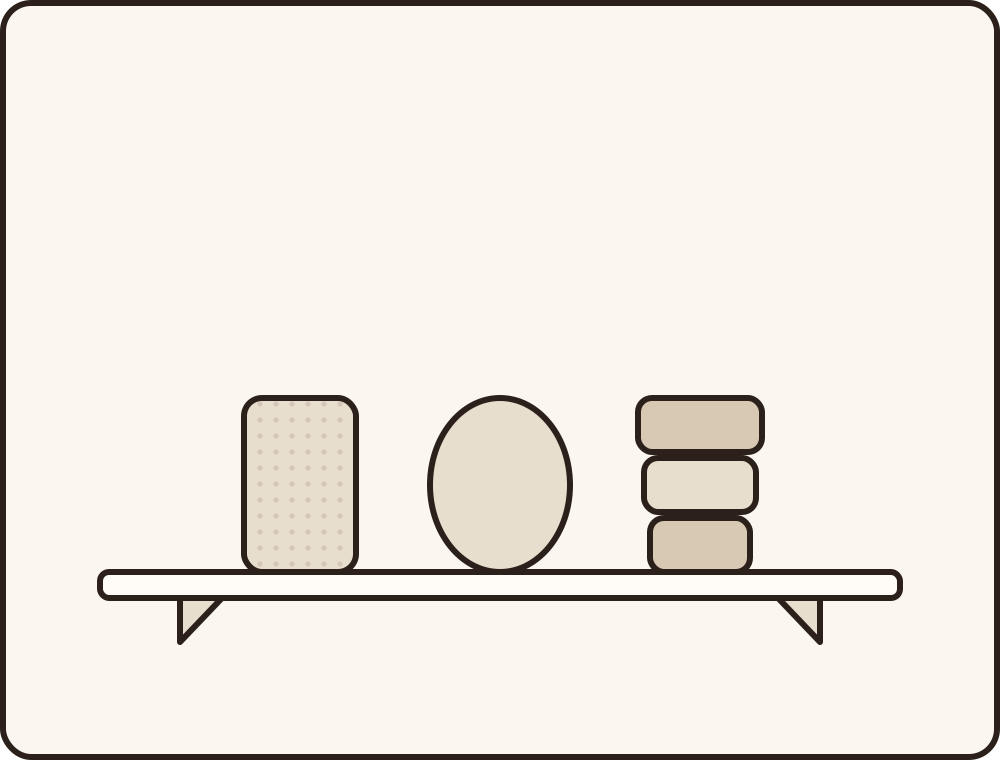
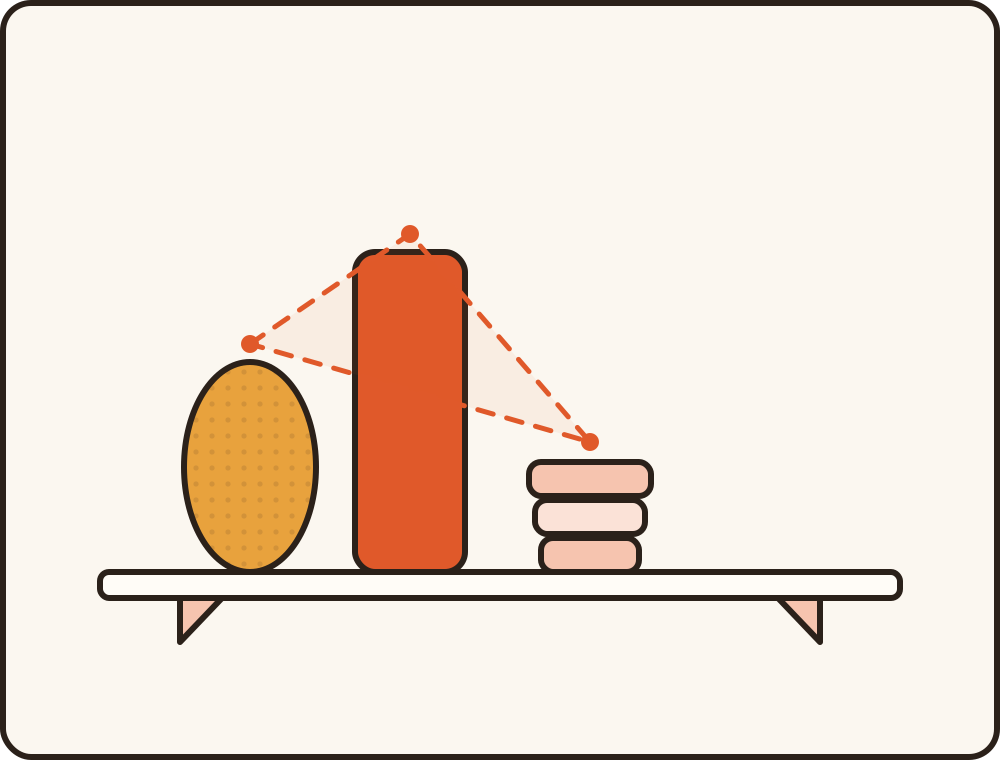
Compare the two. The objects and the shelf are the same. Only the heights and the gaps changed.
A useful target: make the medium piece about two-thirds the height of the tall one, and the small piece about a third. You don't need to measure. If two pieces look the same height from across the room, swap one.
Vary more than height
Three objects of different heights can still look flat if everything else matches. Change at least one more thing:
- Shape. One tall and narrow, one round, one low and wide.
- Texture. Something matte, something shiny, something rough or woven.
- Color. Two that belong together and one that stands out.
Then give them one thing in common, such as a shared color or material, so the group reads as a set and not as three strangers.
Layer front to back
On a deep shelf or a console, height isn't enough. Depth matters too. Build the group in three passes, back to front.
- Back: the tallest piece, close to the wall. A leaning print, a tall vase, a mirror.
- Middle: something mid-height that overlaps the back piece a little. Books, a plant.
- Front: one small object, slightly off to one side.
The overlap is important. When pieces overlap, they read as one group. When each stands alone in a row, they read as a lineup.

The golden ratio, without the math
The golden ratio is a proportion of about 1 to 1.6. Divide a line that way and you get one part of roughly 62% and one of 38%. People have used it in buildings, paintings and page layouts for a very long time because uneven splits tend to look more natural than equal ones.
For a shelf, round it to 60/40 and it becomes practical:
- Don't center the main group. Put it about 40% of the way in from one end.
- Let one side carry more visual weight than the other.
- Leave the lighter side partly empty.
You may also have heard of the rule of thirds from photography, which divides a frame into three equal parts. It's a rounder cousin of the same idea. Both say the same thing about your shelf: off-center beats centered, and uneven beats equal.
Where to use it
- Bookshelf: break rows of books with a group of three objects on every second shelf.
- Coffee table: a tray, a stack of two books and something with height, like a small vase.
- Console or mantel: one tall anchor at one end, a middle group, a low piece at the far side.
- Sofa: three cushions in two sizes instead of four matching ones.
- Wall: three frames of different sizes, hung or leaned as one cluster.
The same logic works at room scale. A sofa, an armchair and a floor lamp form a triangle of heights, which is why our guide to arranging furniture in a small room groups seating on one rug. For a seasonal example, the mantel in our cozy Halloween post is built the same way.
When to break the rule
It's a starting point, not a law.
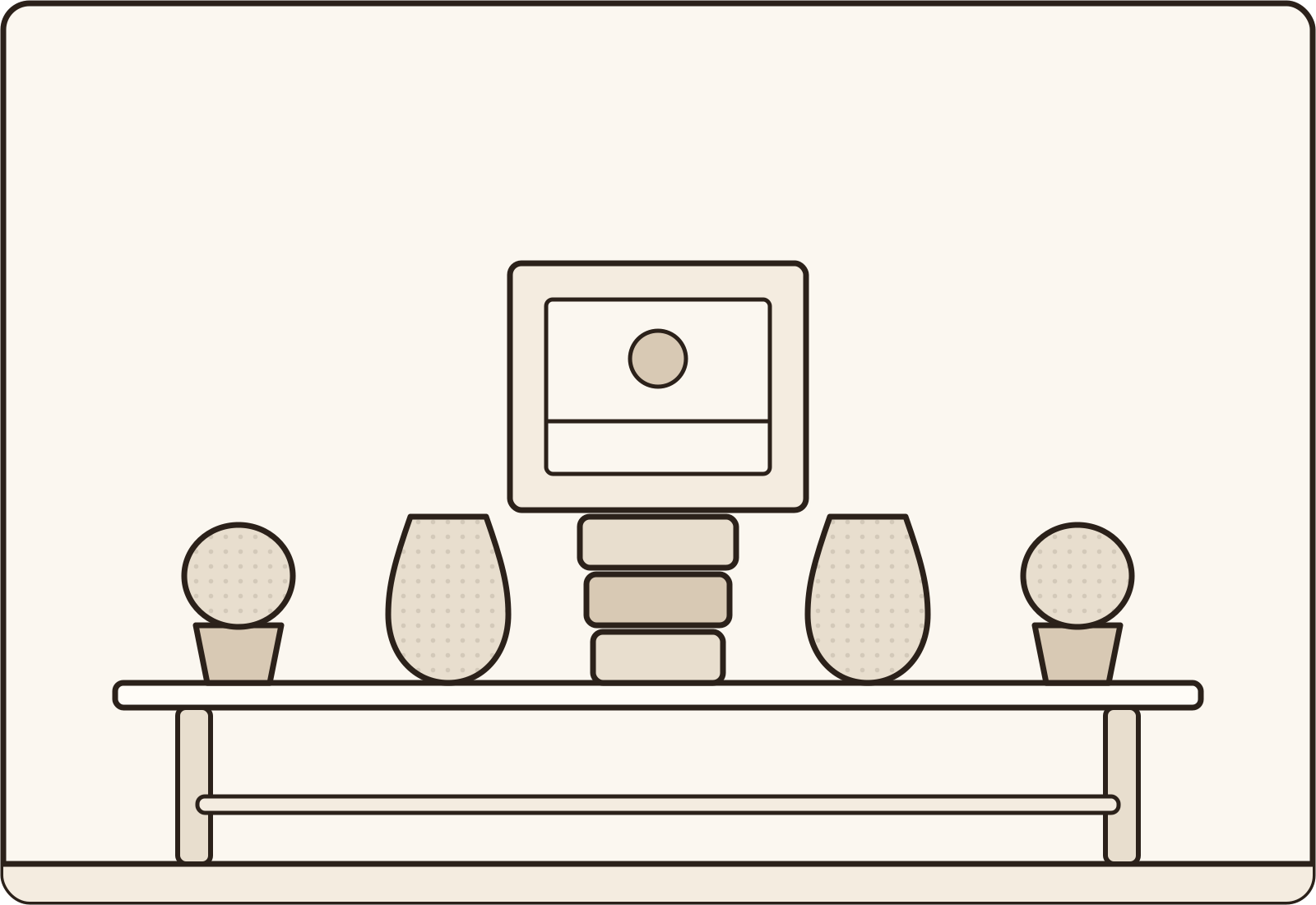
- Pairs are fine where you want calm. Two lamps on two nightstands feel restful, and a bedroom is a good place for symmetry.
- One large piece can stand alone. A big vase or a sculpture doesn't need company.
- Long surfaces need more. On a wide mantel or a long sideboard, use five pieces, or two groups of three with a gap between them.
If a group of two or four looks right to you, leave it. The goal is a shelf that looks intended, and your eye is the final judge.
Four mistakes to skip
- Three objects of the same height. That's a row, not a group.
- Spacing everything evenly, like items in a shop.
- Filling every shelf. Empty space is part of the arrangement.
- Using only small things. Without one tall anchor, the group has no shape.
Style a shelf in 10 minutes
Do this now:
- 1Clear the shelf completely.
- 2Place your tallest piece about 40% of the way in from one end.
- 3Add a medium piece beside it, overlapping slightly.
- 4Add one small piece in front, off to the side.
- 5Step back two meters (about six feet) and squint. Look at the outline, not the objects.
- 6Remove one thing. Leave at least one clear gap.
If the group still looks flat, the heights are too similar. Put the medium piece on a book or two.
A shelf is a good place to practice, because nothing is at stake. A whole room is harder, since you can't move a sofa back and forth for an afternoon. If you'd like to see ideas for the room around the shelf before you buy anything, you can upload a photo to Roomerly. It suggests a style and a palette for your actual space and lists real pieces within your budget.
None of this needs new furniture. It needs three objects of different heights and the nerve to move one of them off-center.
FAQ
What is the rule of three in decorating?
It's a styling guideline: arrange objects in groups of three, or another odd number, and vary their heights. Odd groups look more natural than even ones because the eye can't split them into matching pairs.
Does it have to be exactly three?
No. Five and seven work too, and long surfaces usually need more than three pieces. Three is the smallest odd group, which makes it the simplest to get right.
Is the golden ratio the same as the rule of thirds?
Not exactly. The golden ratio splits a space at about 62/38. The rule of thirds splits it into three equal parts, so the main subject sits at 33% or 67%. For styling a shelf they lead to the same advice: don't center things, and don't split the space in half.
Can I use even numbers?
Yes, when you want a formal, calm look. Matching pairs suit nightstands, the two ends of a sofa and either side of a fireplace. Use odd groups where you want a surface to feel relaxed and lived in.
How do I style a shelf with what I already have?
Pick one tall, one medium and one small object from around your home, such as a vase, a few books and a bowl. Place the tall one off-center, overlap the medium one, set the small one in front, and leave some empty space beside the group.